Supporters provide surplus food
Retail chains, food producers and individual donors give food to food banks. These are goods with an approaching use-by date, unsellable batches, or crops that do not meet commercial appearance standards.
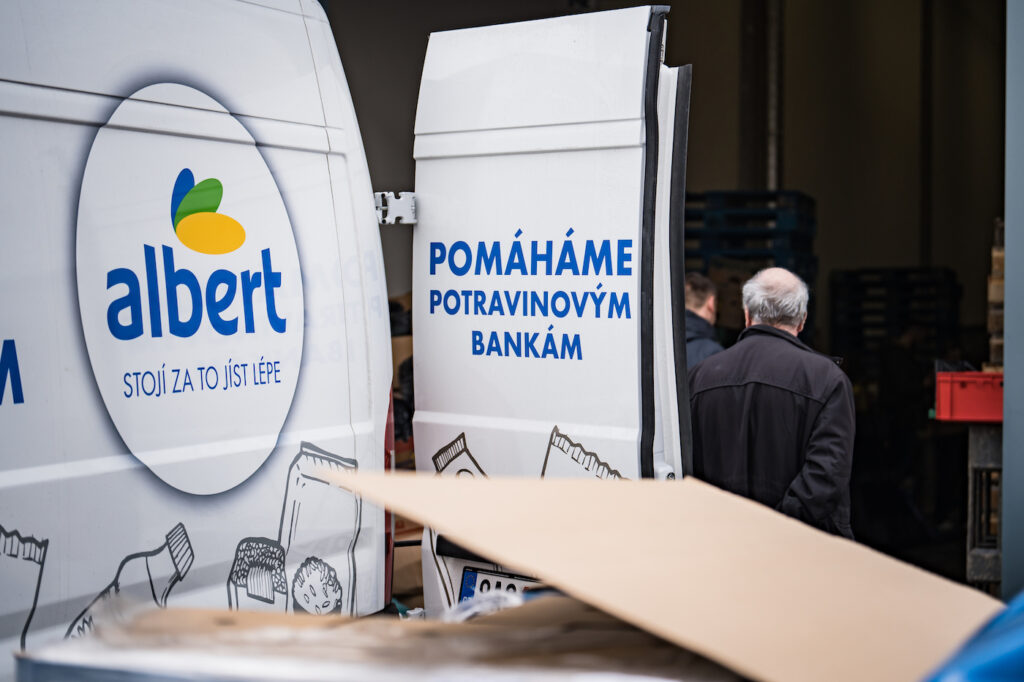
The road from surplus to help is short but carefully watched. See what happens to donated food.
Retail chains, food producers and individual donors give food to food banks. These are goods with an approaching use-by date, unsellable batches, or crops that do not meet commercial appearance standards.
We give the food the best possible conditions. We record it, sort it and share it among 78,000 people in need. The warehouses have chilled and frozen storage and meet all hygiene standards.
Non-profit and charitable organisations share the food among their clients – most often single mothers and pensioners living alone. From the rest we pack bags of staple food in the warehouses and hand them to individuals at distribution points. For those who cannot come, we deliver once a week.
The three steps above look simple. This is what they add up to.
Our record system tracks every item from intake to hand-over. We follow the first in, first out principle and all hygiene standards so that the safety of distributed food is guaranteed.
Donated food often has a short shelf life – that is exactly why nobody will sell it. All the more precisely we have to record it: we know what came in when, in what condition and where it went.
Chilled and frozen goods travel the whole way at a controlled temperature. What does not pass the check does not go any further. It is the dull part of the work, but it keeps the whole system trustworthy for donors and recipients alike.